Breadcrumbing
In this article
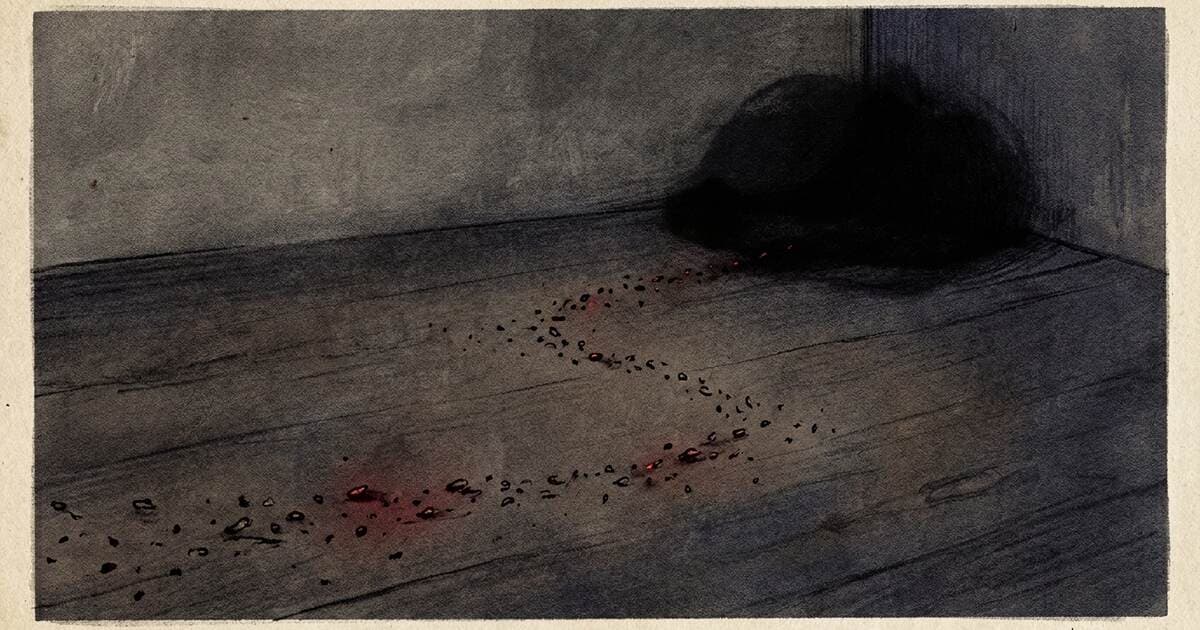
You have been waiting for days for your phone screen to light up with that specific name. The digital silence becomes a deafening buzz in your prefrontal cortex, an obsession that drains your attentional energy, until finally, a message arrives. It is not an invitation to a deep encounter or a question about your overall well-being; it is an emoji, a trivial meme, or an "I'm here, swamped with work," tossed into the void of the conversation at random. Even knowing it is barely superficial contact, you feel your chest momentarily loosen. You have immersed yourself in the anatomy of breadcrumbing, that relational dynamic where you survive on crumbs of love, trapped in the neurological prison of an intermittent relationship.
If you are wondering what breadcrumbing is from a clinical perspective, you must immediately discard romanticized definitions or superficial magazine diagnoses. It is not about "lack of interest" or frivolous "psychological games." Breadcrumbing is the adult staging of an extreme operant reinforcement system, a cycle of scarcity and abundance that hijacks the most primitive motivation circuits in your brain. The person dispensing these crumbs does not necessarily calculate the damage; they simply operate from their own nervous system dysregulation, maintaining an optimal distance to avoid intimacy without losing the neurochemical supply of validation. But the focus here is your neurobiology: why your brain, despite the evidence of pain, keeps interpreting that fleeting notification as a survival milestone.
The machinery of dopamine and intermittent reinforcement
To understand why breadcrumbing is so addictive, we must travel to the center of your midbrain, specifically the ventral tegmental area (VTA) and the nucleus accumbens, fundamental components of the reward circuit. Affective neuroscience teaches us that dopamine is not the pleasure hormone, as common sense dictates, but the neurotransmitter of seeking and anticipation. When you are in an intermittent relationship, your brain faces a variable-ratio reinforcement schedule, the same mechanism that makes slot machines generate devastating addictions.
When you receive crumbs of love unpredictably, your dopaminergic system fires in an unnatural way. You do not know when the next message will come, so your brain maintains an elevated tonic arousal tone, a constant vigilance. This extreme uncertainty is interpreted by the locus coeruleus as a situation requiring maximum alertness, flooding your cortex with norepinephrine. You become hypervigilant. You analyze response times, word choices, the presence or absence of punctuation. Every potential notification generates a dopamine spike, but this spike does not sustain itself.
The central neurochemical problem is that the dopamine released during anticipation must be compensated. When the crumb arrives and does not materialize into a safe, real, reciprocal connection, a crash occurs. The basal dopamine level drops below normal, inducing a state of dysphoria and psychomotor agitation. It is in this valley of neurochemical despair where you become vulnerable to another form of relational anesthesia, often confused with affection. It is a process that dismantles your self-preservation barriers, a phenomenon deeply analyzed in emotional dependence as a survival response, where the brain prioritizes the bond over one's own well-being.
In this cycle, the dorsolateral prefrontal cortex, responsible for rational decision-making and impulse inhibition, loses executive strength. The urgency to relieve the anguish of uncertainty crushes logic. You know intellectually that this dynamic harms you, but the limbic brain demands its dose, demanding that you remain in the waiting line, willing to accept any fragment of attention that falls from the other person's table.
The HPA axis and the physiological impact of hypervigilance
Polyvagal neuroscience, developed by Stephen Porges, offers an exact map of what happens in your body while you wait for those crumbs. When the other person disappears (the scarcity period of breadcrumbing), your sympathetic nervous system activates in a sustained manner. This is not abstract psychological anxiety; it is a physiological cascade designed for predator evasion. Your hypothalamic-pituitary-adrenal (HPA) axis activates, ordering the massive release of cortisol and adrenaline. Your heart races, your digestion slows, and your immune system is suppressed. You are, literally, in fight-or-flight mode, even though the "threat" is the silence of a messaging app.
The devastating problem of an intermittent relationship is that this state of sympathetic alarm is not resolved with a physical action (like fleeing or fighting), but remains latent. When you finally receive a crumb of attention, your nervous system experiences an incomplete social closure. A small flash of ventral vagal nervous system activation occurs —the state of connection and social safety—. You feel temporary relief, the sensation of "finally breathing." However, due to the inconsistency, the brain cannot consolidate that safety.
The result of this chronic alternation between sympathetic activation (alertness from the silence) and vagal fluctuation (temporary relief from the crumb) is a severe autonomic nervous system dysregulation. Your body becomes exhausted. The adrenal glands fatigue from the constant production of cortisol. If this cycle is prolonged, the nervous system, unable to sustain sympathetic hyperactivation any longer, collapses into the dorsal vagal state. This is the state of immobilization, freezing, or "fawning" (pleasing to survive). You stop fighting for your needs and begin to mold yourself, to minimize your presence and your demands so as not to scare away the person dispensing attention. It is here where pain becomes chronic and you adopt mechanisms of relational self-annihilation, understanding it from the logic of people-pleasing to survive or fawning as an immobilizing vagal response, where you renounce your autonomy to maintain the bond at any cost.
Internal working models: The anatomy of anxious attachment
The attachment theory of John Bowlby and Mary Ainsworth gives us the definitive lens to understand why not everyone falls into the breadcrumbing trap with the same intensity. People with secure attachment, when experiencing the withdrawal of emotional investment, experience passing discomfort and proceed to disinvest. Their nervous system, modeled by consistent caregivers in childhood, registers the threat and neutralizes it by distancing themselves from the source of inconsistency. However, for someone with an internal working model shaped by early inconsistency, the mechanism is diametrically opposite.
If in your childhood the affection of your attachment figures was conditional, erratic, or granted as reward or arbitrary withdrawal, your brain recorded a primary biological mandate: human connection is scarce, unstable, and you must work tirelessly to maintain it. In this context, understanding attachment trauma and early wounds is crucial. Trauma is not always a catastrophic event; it is often the accumulation of a thousand emotional absences in moments of vulnerability.
When you are an adult and you face breadcrumbing, your amygdala does not read the situation as "this person is treating me badly," but rather categorizes it as a familiar landscape. The anguish of waiting activates the same panic circuits of the child who heard footsteps moving away from their crib. The brain, in its drive for resolution, pushes the anxiously attached person to "solve" the enigma of the inconsistent caregiver. Receiving crumbs of love becomes proof that the effort is working, that the person has not entirely left. The limbic system confuses the physiological activation of chronic anxiety with the intensity of falling in love.
The person who engages in breadcrumbing usually presents an avoidant profile. In the attachment dance, the avoidant one administers distance and the anxious one pursues closeness. When the avoidant one feels that the anxious one is getting too close, they withdraw emotional investment (they disappear). When the anxious one, desperate, pulls away to lick their wounds, the avoidant one feels the void of losing the oxytocin supply and sends the "crumb." This perpetual push and pull is addictive for both nervous systems, even as it destroys them simultaneously.
Withdrawal syndrome and the cycle of love bombs
Often, breadcrumbing is not a static constant, but is preceded by an overwhelming intensity at the beginning of the relationship. This is what social neuroscience knows as a temporary hijacking of the reward circuit, a phase where critical barriers are overridden, something explored in depth when analyzing the phenomenon of explosive love or love bombing. Love bombs lay the neurological groundwork for the blackmail of subsequent breadcrumbing.
When a person floods you with attention, exaggerated declarations, and promises at the beginning, your brain secretes maximum levels of oxytocin and dopamine. The receptors become saturated. You generate a neurochemical expectation of abundance. When this person abruptly changes phase and begins dispensing only crumbs, your brain does not immediately adapt to scarcity; it keeps demanding the initial dose. You are facing a classic withdrawal syndrome. The endogenous opioid system, which modulates social pain and connection, enters into deficit. Physical pain and emotional pain are processed in the same area (the anterior cingulate cortex), so intermittent abandonment literally hurts in the body.
Breaking free from breadcrumbing demands a massive recalibration, not at the level of "willpower" or affirmations in front of the mirror, but at the level of nervous system regulation. It means tolerating the withdrawal from erratic dopamine and moving through the cortisol spike generated by prolonged silence without trying to resolve it by begging for attention. It is the process of unlearning that emotional scarcity is the currency of love.
In Homo Amans, this relational survival mechanism is dissected with surgical precision, addressing how the human brain, wounded by inconsistency, confuses dysregulation with passion. The book exposes how detoxification from these dynamics does not go through blaming the other for their crumbs, but through understanding the vulnerability of your own limbic architecture and rebuilding, from the biology of attachment, a nervous system that no longer tolerates emotional starvation as a form of bond.