Perimenopause and Your Relationship
In this article
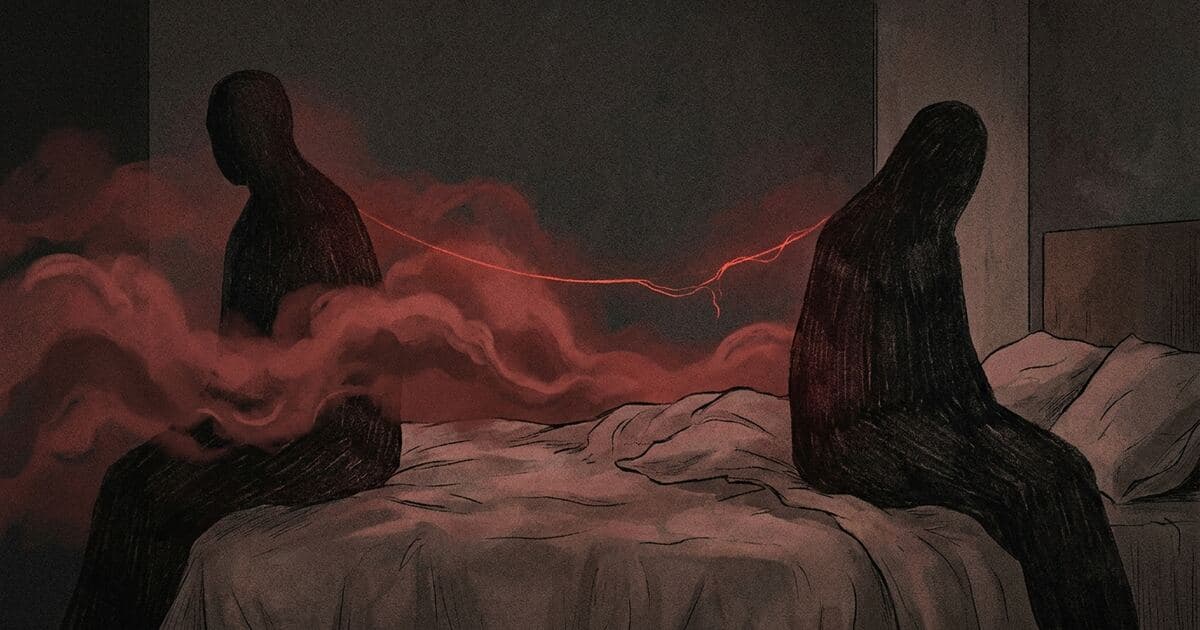
You check the clock in the middle of the night, drenched in a cold sweat with no apparent explanation, while the breathing of the person sleeping beside you suddenly seems unbearably loud, almost a personal attack. In the kitchen the next morning, a trivial comment about breakfast triggers a blind irritability inside you, a volcano of rage rising from a primitive, dark place you barely recognize. Hormonal changes and self-esteem have begun a relentless tug-of-war within your biology. Perimenopause and relationships collide violently when estrogenic fluctuations start rewriting the way your brain processes stress, desire, and intimate connection, leaving you with the unsettling sensation of inhabiting a body that has become hostile territory.
Far from the sappy narratives about maturity or generic manuals on aging, what happens during this process is one of the most brutal neurological remodelings of adult life. It is not just a matter of ovaries ceasing to produce hormones; it is the dismantling of the biochemical pathways that for decades allowed you to manage daily stress and maintain the connective tissue of your romantic relationship. When menopause and desire become antagonistic concepts, what is failing is not romantic willpower, but the sheer availability of neurotransmitters needed to keep the flame of affective tolerance burning.
The Estrogenic Blackout and the Hijacking of the Limbic System
To understand the magnitude of the emotional and physical impact on couple dynamics, we must delve into the role of estrogen in the adult brain. For decades, estrogen has not only modulated the reproductive cycle but has acted as a powerful modulator in the limbic system, especially in the amygdala and the hypothalamus. This hormone promotes the density of serotonin and oxytocin receptors, acting as an organic mood stabilizer and a social lubricant. In other words, estrogen made you biologically more inclined to trust, to forgive, to co-regulate with your partner, and to feel an overall sense of warmth and connection.
When perimenopause begins, estrogen levels do not decline linearly but oscillate erratically, describing nosedives followed by anomalous spikes. This toxic back-and-forth completely destabilizes the HPA axis (hypothalamus-pituitary-adrenal). With the estrogenic drop, serotonin receptors decrease their activity, which explains the sudden appearance of irritability in relationships and atypical depressive episodes. Suddenly, the amygdala, deprived of its serotonergic buffer, becomes hyperreactive. A slightly raised tone of voice from your partner, a poorly washed dish, or an ambiguous look are encoded by your brain as direct threats to your survival.
The prefrontal cortex, which normally modulates and brakes the amygdala's outburst through logical reasoning and empathy, loses steam in this new hormonal scenario. Without estrogen to optimize blood flow and neuronal plasticity in this region, the perimenopausal woman loses part of her "emotional brake." That is why anger explodes before the rational mind can articulate a constructive dialogue. Literally, biology forces the nervous system to operate from a perspective of constant alert and fight response, leaving very little room for marital diplomacy.
The Collapse of Co-Regulation and the Anatomy of Isolation
Polyvagal theory teaches us that human beings are designed to regulate their nervous systems through connection with others. This co-regulation, mediated by oxytocin and the ventral vagus nerve, is what allows us to calm down when we are stressed simply by hugging our partner or holding a tender gaze. However, during perimenopause, the nervous system becomes increasingly refractory to co-regulation. The loss of oxytocin receptors means that your partner's hug no longer produces the same chemical relief it produced five years ago.
This physiological disconnection generates a devastating side effect in the relationship: loneliness. When irritability and blind rage become the protagonists of the home, the partner reacts, naturally, by withdrawing, closing in on themselves, or counterattacking. If the partner does not understand the violent neurological reorganization taking place, they will assume there is a relationship problem, an underlying resentment, or a crisis of love. Unable to co-regulate how your partner calms you because the body does not process comfort the same way, isolation turns inward.
This chronic state of sympathetic dysregulation pushes the woman toward a dorsal branch of the vagus nerve, characterized by immobilization, apathy, and emotional disconnection. Loneliness and the nervous system feed back into each other in a toxic spiral during this period. The woman feels she no longer fits into her own life, that her partner is a stranger, and that sexual desire has been replaced by a deep visceral exhaustion. The mind, trying to find a culprit for this atrocious discomfort, often projects it onto the relationship, erroneously concluding that the marriage is the source of the suffocation.
Desire Usurped by the Reorganization of Dopamine
One of the biggest and most painful taboos of perimenopause is the metamorphosis of sexual desire. The loss of libido is not a whim, nor a failure of romantic commitment; it is a direct consequence of how the brain is managing dopamine and testosterone under the new endocrine conditions. Estrogen and testosterone are crucial for keeping the mesolimbic reward circuits fired up—the ones that secrete dopamine and drive us to actively seek physical intimacy.
As the ovaries reduce their hormonal production, the adrenal glands have to take over, but they often do so insufficiently. Without the dopamine spikes associated with the anticipation of sex, physical intimacy loses its hedonic shine. Sex can begin to feel like just another chore, like another household obligation on the list, which generates deep resentment and guilt. The rational mind knows it loves its partner, but biology refuses to provide the chemical spark that sustains eroticism.
This mismatch between intention and physical response is the trigger for many crises at 40 in a relationship. The lack of desire leads to avoidance of physical contact out of fear of disappointing the other, which in turn increases emotional distance. This reluctance to be touched can be misinterpreted as personal rejection, unleashing a cold war of insecurities within the home. The vulnerability required to admit that the body no longer responds as it once did demands a level of emotional maturity and security in the bond that many relationships, already cracked by years of micro-resentments, cannot sustain.
Toward a New Architecture for the Couple
Surviving this neuroendocrine storm does not require hollow empowerment, but rather a deep renegotiation of the terms of attachment. Perimenopause demands that the relationship move from depending on the easy chemistry of spontaneous desire to a conscious effort to maintain intimacy through physical and emotional friction. This is where it becomes vitally important to understand secure attachment and how it is built. Secure attachment at this stage means that the partner can tolerate the irritability of the dysregulated amygdala without taking it as a personal attack, and can contain the silence of the fallen libido without feeling unwanted.
It requires the other to become a stable anchor, capable of identifying that the cold gaze or the outburst of rage from their partner is cortisol speaking, not the essence of the bond. In turn, it demands brutal honesty from the person going through the changes: admitting that the body hurts, that the mind is clouded by perimenopausal fog, and that the defense mechanism is firing in perpetuity. It is a period for shedding the obligation to please and demanding, instead, a space of containment where the nervous system can rest from its own hyper-alarm.
In Homo Amans, this vital transition is not dressed up with flowers or promises of spiritual renewal. The book sinks its roots into how the brutality of our hormonal systems determines, to a large extent, the fate of our bonds, exposing how a couple's survival in maturity depends on their capacity to cross the biological silence and rediscover themselves in the dark and often painful truth of the aging flesh.