Jealousy: the attachment alarm system
In this article
- What is jealousy for?
- When is the jealousy alarm miscalibrated?
- The trap of rumination
- When jealousy is valid information
- What to do when it sounds
- How do different attachment systems calibrate the jealousy alarm?
- What role does personal history play in jealousy?
- When does jealousy stop being an alarm and become a problem?
- The alarm speaks about you, not just about the other person
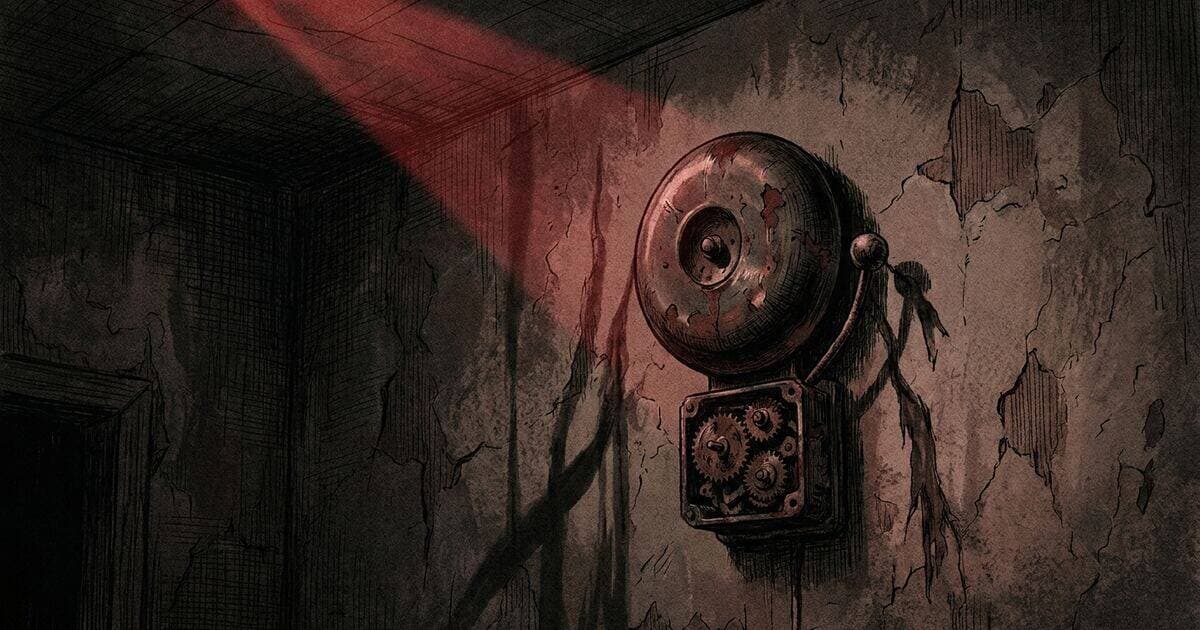
Jealousy has a bad reputation, and with good reason: in its extreme form it destroys relationships, justifies control, and poisons healthy bonds. But treating it only as a flaw to eliminate leaves out the most important thing for understanding it. Jealousy, at its origin, is not a defect. It is an alarm system. And like any alarm, it has a function: to warn of a possible threat to the bond you depend on.
The problem is not that the alarm exists. The problem is when it goes off, with what intensity, and what you do when it sounds. A fire alarm is useful; one that activates every time you cook is hell. The same goes for jealousy, and the difference between one and the other has less to do with your partner than with how your system is calibrated.
What is jealousy for?
From an evolutionary perspective, jealousy served a clear function: protecting a valuable bond from an external threat. For a species whose survival and reproduction depended on stable bonds, detecting and reacting to the possibility of losing a partner —or the resources and care associated with them— made adaptive sense. Jealousy is, in that sense, the flip side of attachment: you feel jealous about what you fear losing, and you only fear losing what matters to you.
This explains why trying to "never feel jealousy" usually fails. It is like trying to turn off pain: pain warns of damage, jealousy warns of a threat to the bond. The reasonable goal is not to shut off the alarm, but for it to be well calibrated and for you not to drive the car from panic when it sounds.
When is the jealousy alarm miscalibrated?
This is where attachment comes in. A system with anxious attachment comes from the factory with an overly sensitive alarm: it learned early that closeness is uncertain and that the other person can leave, so it detects threats everywhere. A message, a glance, a new friend, a "me" in a photo: everything is processed as a possible sign of loss, and the alarm goes off with an intensity disproportionate to the real threat.
For that system, jealousy is not a response to a concrete threat; it is the baseline state projected onto any stimulus. And like any activation of the attachment system, it happens fast, below thought, before you can assess whether there is real danger. We developed this in your nervous system decides before your heart does: by the time you "decide" to feel jealous, your body has already reacted.
The trap of rumination
There is a particularly exhausting variant: jealousy that is not based on anything concrete and feeds on itself. It starts with a minor doubt and, instead of dissolving, it expands. The mind manufactures scenarios, reviews the past, searches for evidence, reinterprets innocent gestures as suspicious. Each twist confirms the previous one, and the system convinces itself of a danger that only exists inside.
It is the same rumination engine we described in rereading messages at 3am: a brain trying to resolve uncertainty by searching for information, without realizing that the search itself feeds the uncertainty. Retroactive jealousy —obsessing over a partner's romantic past— is one of its purest forms: pain over something that cannot be changed, sustained by a rumination that mistakes itself for investigation.
When jealousy is valid information
It is worth not going to the other extreme and dismissing all jealousy as paranoia. Sometimes the alarm sounds because there is real smoke: a partner who actually crosses boundaries, who is ambiguous, who feeds insecurity. Distinguishing the two is central. The useful question is not "do I feel jealous?" but "does this alarm respond to something happening outside, or to something I carry inside?" The honest answer is not always comfortable, but it is the only one that guides what to do: in one case, talk about what is happening in the relationship; in the other, work on calibrating your own alarm.
What to do when it sounds
The first thing is not to confuse the intensity of the emotion with the reality of the threat. That jealousy feels overwhelming does not mean the danger is real; it means your alarm is sounding loudly. That second of margin —"what I feel is an alarm, not necessarily a fact"— is what prevents you from acting on the control, the accusation, or the tracking that end up damaging the very bond you fear losing.
The second thing is not to try to calm the alarm through the path that reinforces it. Checking your partner's phone, demanding constant reassurances, controlling: all of that gives momentary relief and leaves the alarm more sensitive for next time, because it teaches the system that the only way to be calm is to monitor. Sustainable calm comes from somewhere else: from learning to tolerate the inevitable uncertainty of loving someone who is free, and from calibrating an alarm that was probably miscalibrated long before this relationship.
How do different attachment systems calibrate the jealousy alarm?
An anxious system comes from the factory hypersensitive. The early wound of that attachment is loss, abandonment, indifference. So the alarm is configured to detect any signal that remotely resembles distance. A partner who takes an afternoon alone is interpreted as imminent abandonment. A laugh shared with someone else feels like the beginning of displacement. It is not paranoia; it is that the nervous system is permanently on alert, looking for the threat it knows: the loss of the bond.
The avoidant system, on the other hand, has a different alarm: it does not fear being abandoned so much as being invaded, trapped. Jealousy, when it feels it, is usually directed at the partner and their closeness, more than at external rivals. But when it appears directed at the other person, it is often in the form of surveillance and control: a way of keeping distance. The avoidant distrusts closeness itself, not just the threat of betrayal.
A disorganized system has the most complicated situation: the alarm is disordered, going off without a clear pattern, because in its history closeness was a threat (mistreatment by an attachment figure, for example). For that system, jealousy can be almost a confirmation of what it always feared: "see, even if you love someone who loves you, something can be wrong, there is always danger." Turning off that alarm requires deep work on relational safety.
What role does personal history play in jealousy?
Jealousy rarely comes from a void. It is, almost always, the inheritance of a history. If you had a childhood where a caregiver was unfaithful, where betrayal broke the family, where you learned that "men always cheat" or "women always leave," that data gets stored. When a partner arrives, that prior information is there, invisibly, coloring how you interpret their actions.
Recent history also plays a role. If you were betrayed in a previous relationship, jealousy can appear as a defensive reflex: "this is not going to happen to me again." It is the system trying to protect you. The logic is: "if I monitor, if I detect anything weird, if I keep constant pressure, I can avoid betrayal." That logic is understandable but ineffective; in fact, it usually causes exactly what it fears.
And then there is the history of this bond. If a partner was ambiguous with you, if they gave mixed signals, if they were inconsistent, the jealousy that appears is not irrational. It is the alarm reacting to real data. The question then is different: it is not whether the jealousy is valid (maybe it is), but whether it is worth staying in a relationship that constantly activates that alarm.
When does jealousy stop being an alarm and become a problem?
Jealousy becomes destructive when it turns the alarm into controlling action. It is not enough to feel the unease; you start checking the phone, asking questions with an interrogating tone, limiting your partner's social life, demanding constant reassurances. Each of those actions gives momentary relief —the system lowers the alarm a bit because you "checked"— but reinforces dependence on control. It teaches the system that the only way to be calm is to monitor.
That is especially destructive for the couple. Because real security can never come from control. If you need to monitor to believe that someone is not betraying you, then you will never truly trust. And if the other person feels monitored, even if they are innocent, they will eventually resent it and pull away. Controlling jealousy becomes a self-fulfilling prophecy: it started because you feared losing someone, and it ends up being what causes the loss.
The turning point is when you go from awareness (feeling the jealousy, noticing it, communicating it) to non-consensual action (investigating without permission, controlling, isolating). A relationship can survive occasional communicated jealousy. It cannot survive sustained surveillance and control, even if it is "because I love you."
The alarm speaks about you, not just about the other person
In Homo Amans, jealousy appears as a messenger worth listening to without blindly obeying. It tells you that something matters enough for you to fear losing it —and that is information about your bond. But its intensity and frequency tell you, above all, how your attachment system is calibrated —and that is information about you. Learning to read the difference is what separates jealousy that protects a bond from jealousy that destroys it in the name of saving it.